
07/10Electronics new
Digital Soldering Station
Based on an 8-bit microcontroller and a 2.4" TFT display.
Idea
I probably don’t need to explain that a soldering iron for an electronics engineer is the same as a computer for a programmer – it’s simply a fundamental, essential tool.
Unfortunately, as is often the case, good tools cost a lot. Back when the project was originally conceived, I was still studying in a technical school, so I couldn’t afford to spend several thousand zlotys on a soldering station. There was only one solution: to create my own. Thus, the project was born, which has been continuously used for many years up to this day. It underwent modifications to its software, interface, and casing in 2024. I present to you the soldering station 2.0.
Technology stack
04 Arduino
 C++
 Eagle
 Fusion 360
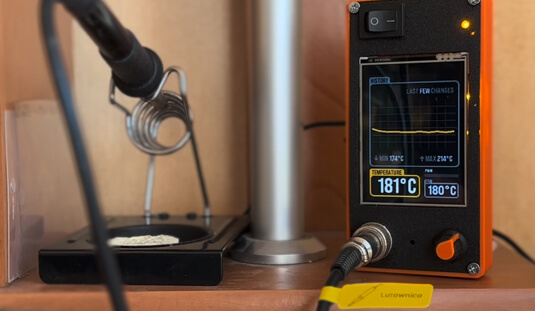
The soldering station is managed by an 8-bit microcontroller from Atmel. Originally, the display was a component salvaged from a Siemens S65 phone, but it was damaged over time, leading to the decision to redesign several elements. The program is entirely written in C. The actuating element is a soldering iron with a built-in heating element and a type "K" thermocouple. The heating element is controlled via an IRFZ44N MOSFET transistor, and the temperature sensor signal is processed by a MAX6675 integrated circuit. I added an LED to indicate when the soldering iron is placed back in its stand, a buzzer to signal when the set temperature is reached, and an encoder to control the entire interface.
Enclosure
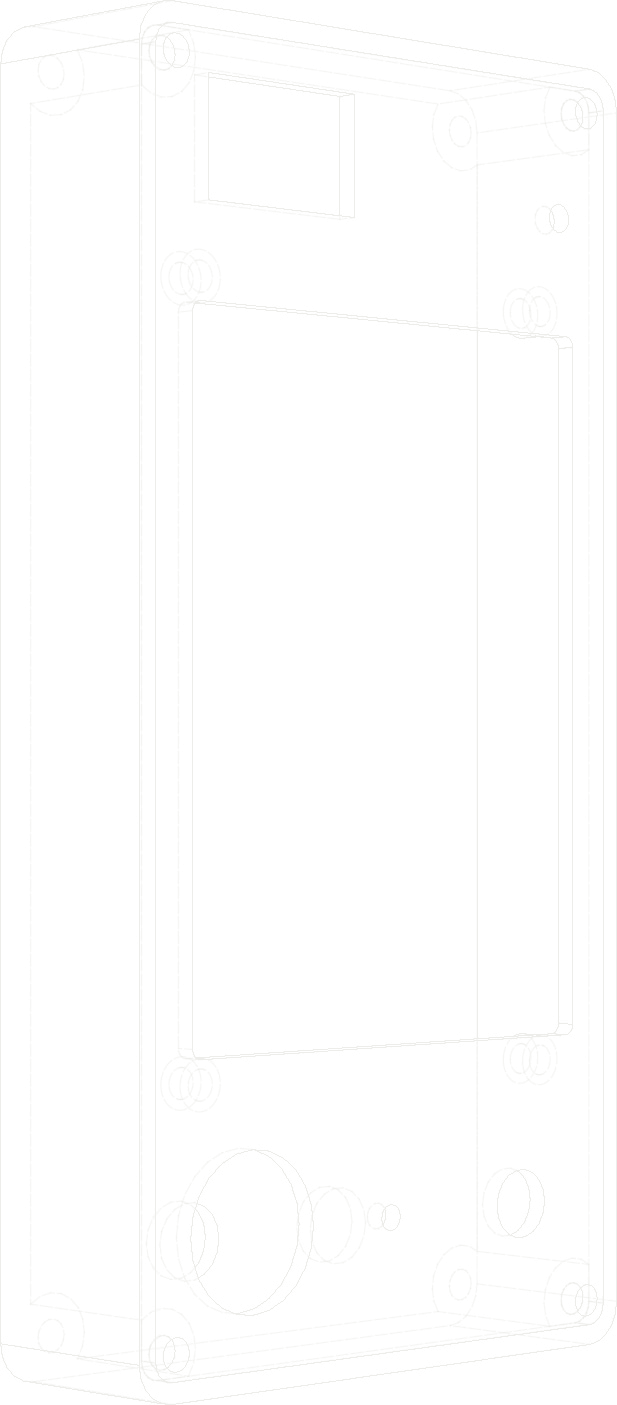
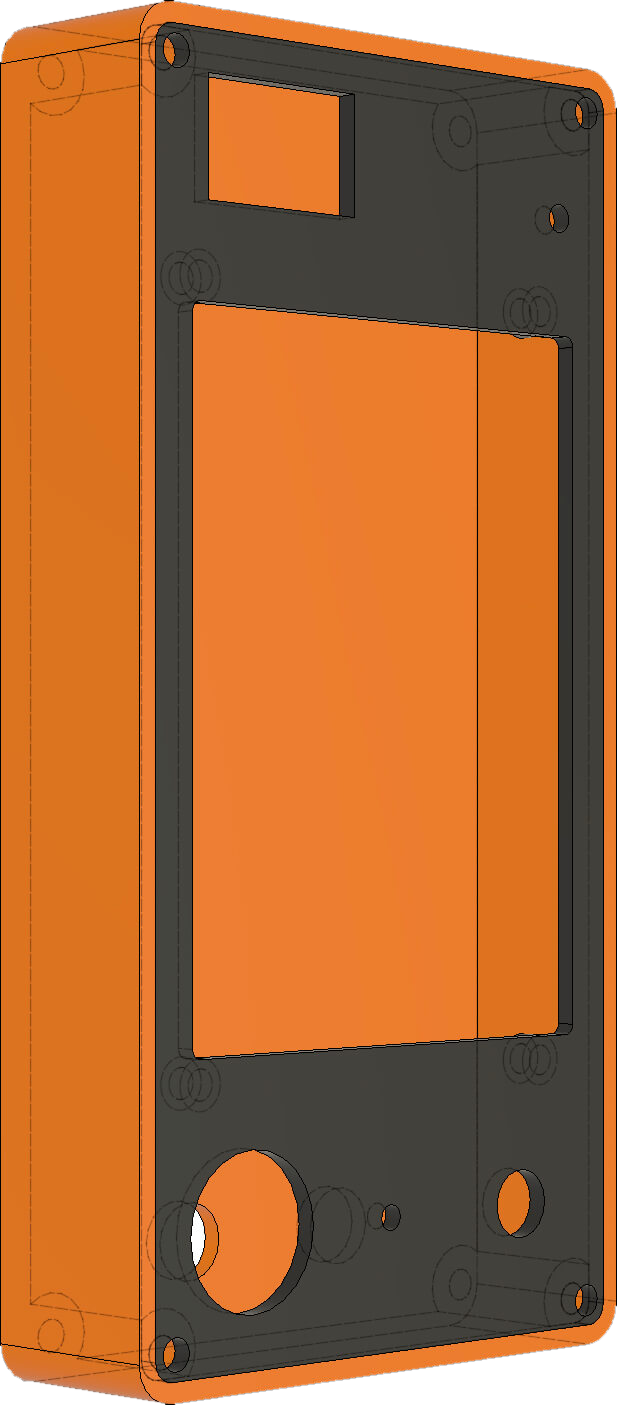
All the projects I've created over the years had one fundamental flaw... the enclosures! I'm not very skilled at manually creating beautifully finished cases. When the display on the first version of my soldering station broke, I seriously considered buying a 3D printer so that the final result of my projects would be satisfactory to me. Thus, I became the proud owner of my first Bambu Lab A1 Combo printer. Since then, creating enclosures has been a pleasure for me. Enclosure for soldering station was my very first project!
Mechanics
When the soldering station is turned on and the soldering iron is placed in the holder, the microcontroller controls the heater to reach the set temperature in standby mode. This allows the soldering iron to heat up to the set temperature much faster once it is removed from the holder. Both temperatures can be freely adjusted at any time. The station will provide an audible notification when the working temperature is reached. The display continuously updates information such as: temperature graph over time, set and current temperature, and PWM output level (power).